
This Place is a Message
True East
cmntx-049In 1993, Sandia National Laboratories published a report in the field of nuclear semiotics about how to communicate to a civilization 10,000 years in the future – one that will almost certainly not speak any language currently spoken on Earth – of the dangers of nuclear waste. It made recommendations on what messages the semiotic and pictographic information should evoke to these future humans, in increasing levels of complexity. The first of these was “This place is a message... and part of a system of messages... pay attention to it!”
Instrumental musicians are also, in their own way, semioticians. There’s a small chance at conveying verbal information in the song title and, should a curious listener pay attention, liner notes like these, but after that, the emotional, social, cultural, philosophical and even sometimes political content of their music has to be conveyed using an array of non-verbal musical gestures. This can feel limiting and prone to misunderstanding, but in other ways, it can create something deeper and less didactic than lyrical music can achieve, something that speaks in a more durable language.
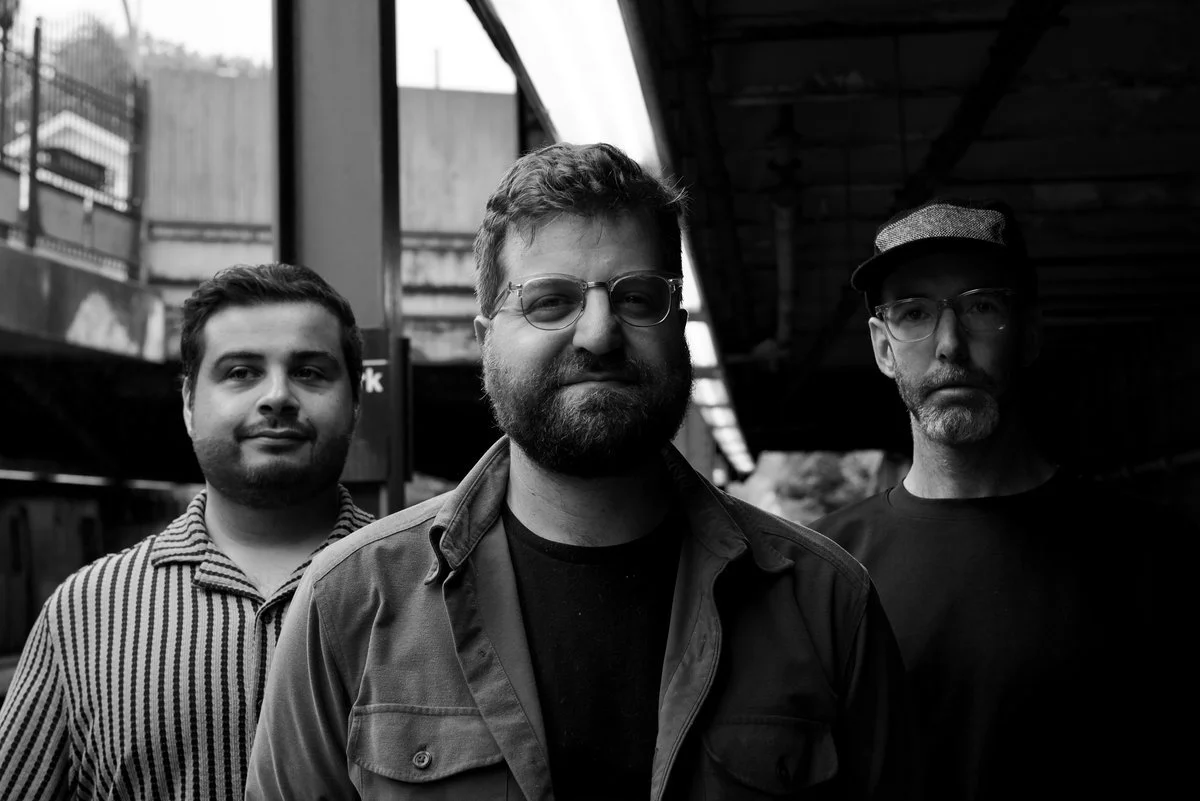
Other than the (possibly unintended) poetry of the phrase, “This Place is a Message” encapsulates how this collection of music comports itself. The music sometimes recalls physical locations but it also creates its own unique “place” with its own vocabulary and artistic purpose. The band name “True East”, in addition to being a play on the term “true north” that nods to its more hard-edge, NYC sound, takes a cue from the philosophy of the Chicago-based Neo-Futurist theater group that eschews suspension of disbelief in pursuit of “non-illusory” art; in the same way their ethos is “you are who you are in your real life”, True East is composed of three New York musicians with interests in everything from Cuban rumba to indie rock, but exists, non-dogmatically, as its own thing.
The title track, “This Place is a Message” opens the album like a warning itself - a melody based around the pulsing of a single note, with double-tracked basses and thundering drums that bring with them a sense of urgency for no explicit danger. True to the nature of the title, the track exists slightly outside of a defined idiom. Elsewhere throughout the record, the other Sandia warning messages, “(...And Part of a System of Messages)” and “(...Pay Attention To It”), both collective improvisations by the ensemble, invite the listener to draw their own conclusions and imagine their own relation to the music.
Explicit idioms do exist throughout the record, though not perhaps in the way they’re usually expressed. “Follow the Snake” takes the fundamental Cuban son montuno sound and presents it both straight and warped - sometimes modulating to rhythmically-tricky 12/8 patterns, sometimes going into a “Ornette meets guajira” form of futuristic primitivism. “Flowers and Gold” combines the unmistakable street beat of New Orleans with a slightly cubist melody where harmony sometimes drops away entirely and “Crickethead” takes the basic flamenco melodic style and runs it through a gamut of rhythms and harmonic counterparts.
The musical “places” are sometimes filmic in nature. “Ex-Yakuza”, inspired by the both the cinematographic and compositional styles of director Akira Kurosawa and music collaborator Masuro Sato, respectively, is a simmering, funky almost-blues meant to recall slow pans and shadowy textures of gangster, cities and glittery Tokyo nights. “Horse Thief”, inspired heavily by Italian film composer Ennio Morricone, takes an evocative Western melody and uses metric modulation to build it faster and faster, constructing a vision of the titular thief speeding away before meeting the swift hammer of justice.
Within the recollections of places, there are also expressions of political sentiments as well. The West African influenced “You’ll Have to Go Through All Of Us” presents its theory as a rubato melodic statement and its action in the form of that statement as a dance, celebrating in the resilience of joy and multiplicity as a defense against tyranny. The album’s closer “The Lamplighters” set a plaintive, mournful melody against the drudging, increasingly chaotic backdrop of the rhythmic section as a reference to the back-breaking work of those who carry “the lamp” – the welcoming of immigrants to American shores – when the New Colossus and her native children fail to do so.
“This Place is a Message” is simultaneously a singular statement of the band’s philosophy and a compendium of its interests. It states that with only a few instruments, an ensemble can unlock and paint whole worlds, traversing both physical, stylistic and emotional planes. The music is meant to live in both its own intentions and open to interpretation. Once the meaning fades, the sound will still remain.
artists
True Eastcredits
released July 10, 2026
All compositions by Dan Lehner
'(..And Part of a System of Messages)' and '(...Pay Attention To It!)' are collective improvisations by the ensemble
Produced by Caleb Wheeler Curtis and Dan Lehner
Engineered and Mixed by Dan Langa
Recorded at The Honey Jar
Additional recording engineered by Alex Ring Gray at Dunvagen Music
Mastered by Alex Ring Gray
Artwork and design by Travassos
Dan Lehner - trombone
Ran Livneh - upright and electric bass
Zack O'Farrill - drums and percussion
© ℗ 2026 True East, Cmntx Records